How to Choose the Best Ceiling Insulation
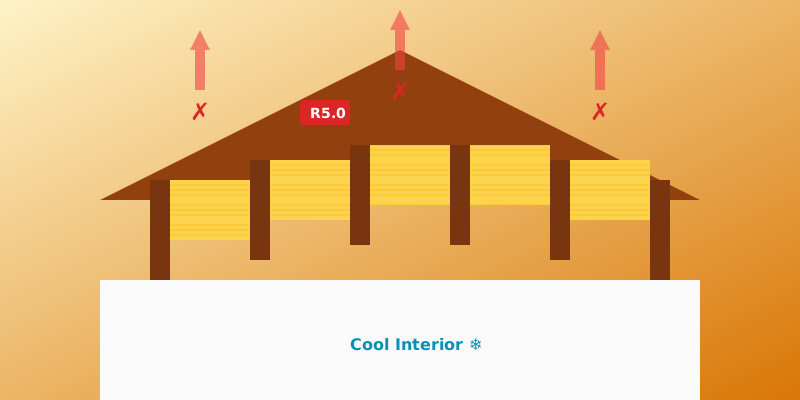
Ceiling insulation is one of the highest-impact cooling upgrades. Up to 35% of a home's heat enters through the roof in summer. Proper insulation (R5.0+) can reduce cooling costs by 20-40% and typically pays back within 3-5 years.
Key Features to Understand
R-Value Requirements
R-value measures thermal resistance - higher is better. NCC 2024 requires R5.0-R6.0 for most of Australia, with R6.0+ for cooler climates. Many older homes have R2.0-R3.0.
Material Types
Glasswool batts are most cost-effective. Polyester is better for allergy sufferers. Blown-in insulation fills gaps better in retrofits but costs more.
Gap-Free Installation
Gaps around downlights and at edges can reduce effectiveness by 35% or more. Professional installation typically achieves better coverage than DIY.
What to Look For
- ✓R-value that meets or exceeds NCC requirements for your climate zone
- ✓Quality batts with consistent density
- ✓Gap-free installation around downlights and at edges
- ✓Proper coverage of the entire ceiling area
- ✓Blown-in for retrofits with difficult access or existing insulation
- ✓Government rebates that can reduce cost significantly
What to Avoid
- ✗Undersized R-value - aim for R5.0+ regardless of minimum requirements
- ✗Gaps around downlights - major heat loss points
- ✗Compressed or damaged batts - reduces effectiveness
- ✗DIY if you have limited roof access or many obstacles
Typical Price Ranges
💡 Note: State rebates (VEU in Victoria, ESS in NSW) can reduce professional installation costs by 30-50%. Always check rebate availability first.
Climate Considerations
NCC 2024 requires different R-values by climate zone. Hot zones (QLD, NT) need R4.6-R5.1 minimum. Temperate zones need R5.0-R6.0. Cool zones need R6.0+. Higher is always better for cooling - aim for R6.0+ regardless of minimum requirements.
Research Resources
We recommend these credible sources for comparing specific products and finding current reviews:
Frequently Asked Questions
What R-value do I need for my climate zone?
NCC 2024 minimums: Zone 1 (Darwin): R4.6, Zones 2-3 (QLD coast): R5.1, Zones 4-6 (most of mainland): R5.0-R6.0, Zones 7-8 (cold areas): R6.0+. For cooling, aim for at least R5.0 regardless of zone. Higher is always better.
Can I install ceiling insulation myself?
Yes, if you have safe roof access and the space to move around. Safety essentials: proper lighting, secure planks to walk on (don't step on ceiling), dust mask, gloves, long sleeves. Professional installation is recommended for difficult access, blown-in requirements, or if uncomfortable in roof spaces.
What rebates are available for insulation?
Victoria (VEU): Significant discounts through accredited providers, often 30-50% off. NSW (ESS): Discounts available through energy retailers. SA (REPS): Rebates for ceiling insulation. Check with your state energy program or retailer for current offers.
Related Guides
Need Professional Installation?
Get free quotes from trusted local installers. We'll match you with vetted professionals in your area.
Get Personalized Recommendations
Answer a few questions about your home and get specific recommendations based on your climate, budget, and needs.
Get My Free Plan